

Common Combinations of Air Pollution Control Equipment
Zeolite Rotor
+
RTO
This combination is commonly considered for suitable large-airflow, low-concentration VOC exhaust applications. The zeolite rotor adsorbs and concentrates VOCs from the exhaust gas, while the RTO treats the concentrated gas stream through high-temperature oxidation.

Dust Collector
+
VOC Treatment System
Some industrial processes generate both particulate matter and VOCs. In these cases, a suitable dust collection stage may be installed before the VOC treatment equipment to reduce particulate loading and protect downstream components.

Scrubber
+
Further Treatment Equipment
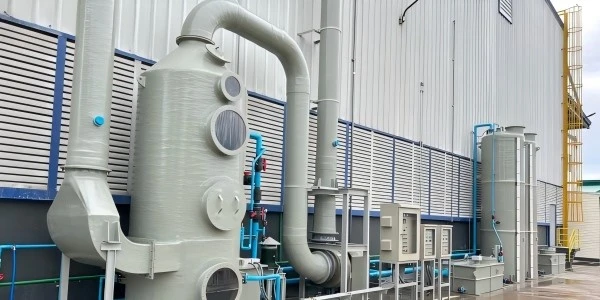
Wet scrubbers can be used to absorb certain water-soluble gases or neutralize specific acidic pollutants when suitable scrubbing liquids are selected. Depending on the exhaust gas characteristics, a scrubber may be combined with additional treatment equipment to address other pollutants.
Why Combine Different Treatment Technologies?
Combining treatment technologies offers several potential advantages:
- Broader pollutant control: Different units can target different pollutants in the same exhaust stream.
- Better process compatibility: Pretreatment can help protect downstream equipment when designed appropriately.
- Improved overall efficiency: Each stage can focus on a specific treatment task.
- Flexible system design: Equipment configurations can be adapted to different production processes and emission requirements.
However, more equipment does not automatically mean better performance. Every additional stage introduces investment, maintenance, and operating considerations. The complete system must be evaluated as a whole.
What Should Be Considered Before Combining Equipment?
Before designing an integrated air pollution control system, several factors should be carefully evaluated:
- Exhaust gas composition: Identify the pollutants and their concentrations.
- Airflow and operating conditions: Determine the required treatment capacity and whether production is continuous or intermittent.
- Temperature and humidity: Check whether the gas conditions are suitable for the selected equipment.
- Safety requirements: Assess flammability, explosion risks, chemical reactions, and other process hazards.
- Operating costs and maintenance: Consider energy consumption, consumables, equipment accessibility, and expected maintenance needs.
- Emission targets: Confirm the applicable discharge requirements and verify that the complete system can meet them.
A customized process design helps ensure that the equipment works together effectively rather than operating as a collection of separate units.
Different air pollution control systems can be combined to meet complex industrial emission requirements. Solutions such as zeolite rotor + RTO, dust collection + VOC treatment, and scrubber-based treatment systems can address different needs when the process is properly designed
.
The most suitable configuration depends on the actual exhaust gas characteristics, treatment targets, site conditions, and operating budget. A well-planned integrated system can balance treatment performance, operational reliability, and long-term costs.